
Park Forest City Directory Collections
Park Forest began as a postwar planned community, so its directory shelf does not reach back like that of a nineteenth-century town. Regional Illinois Bell books and local archive leads form the core. The coverage table separates verified digital items from local years that still need staff confirmation.
| Collection | Years or span | Where held | Access |
|---|---|---|---|
| Chicago Heights regional telephone book | June 1953 to June 1954 | Library of Congress | Digitized, 512 images; PF locality code |
| Chicago Heights regional telephone book | June 1955 to June 1956 | Library of Congress | Item record and page inspection |
| Surrounding-area Illinois Bell book | February 1947 to August 1948 | Library of Congress | Pre-incorporation lead, not assured PF coverage |
| Park Forest street-address leads | 1957, 1960, 1963, 1964, 1965, 1968 | PFPL and PFHS | Call ahead and verify each year |
| Park Forest Reporter | 1949 to 1976 | PFPL and PFHS | Microfilm; missing material may exist offsite |
| Park Forest Star / Southtown Star | 1976 to current, per PFHS | PFPL and PFHS | Confirm exact issue access |
| PFHS local files | Run not published | PFHS archive and PFPL cabinets | Friday hours, phone, or appointment |
The phrase city directory describes several kinds of source here. A telephone book, street-address volume, Officials and Employees file, and census file do not share one publisher or one annual run. Cite the collection as printed.
Why Park Forest Directories Start Late
The Illinois Digital Archives chronology places the founding plan in 1946, first move-ins in August 1948, and incorporation on February 1, 1949. County deeds can predate those dates because Cook County records begin in the nineteenth century and Will County documents reach to 1836. A Park Forest city directory, however, appears only after the community took shape.
| 1946 | The planned GI Town idea and development story begin. |
|---|---|
| August 1948 | First residents move into the new community. |
| February 1949 | Park Forest incorporates. |
| 1953 to 1954 | The first verified local telephone-directory item uses PF entries. |
| 1980 to 1981 | PFPL reference staff establish the local history archive now associated with PFHS. |
Do not collapse a county record date into a town date. An early deed may identify a builder or corporation rather than a household, while a later directory can name a resident at the completed address.
Read PF in the 1953 Directory
The June 1953 to June 1954 Illinois Bell book is the strongest verified digital Park Forest city directory source. It covers the Chicago Heights region from Crete to Steger and marks Park Forest with PF. Its 512 images contain alphabetical names, street addresses, local exchanges, and uppercase business headings. Some entries add an occupation or business description.
Search by surname, but also scan the locality key and nearby pages. Initials can hide a given name, and two people with the same surname may have different PF addresses. Record the image number, printed page, spelling, house number, street, exchange, and neighboring entries. A historic telephone number is not a current contact method.
The item includes example entries such as Morgan L. Ailes at 155 Elm PF and N. V. Brower at 293 Forest PF. These show the printed format only. They do not establish who lives at either address now.
Decode a Park Forest Directory Entry
A city directory line is compact because the printer expected readers to use an abbreviation key. Transcribe it before expanding it. Do not silently turn an initial into a full name or treat an uppercase business heading as a home entry.
| Printed field | What to record |
|---|---|
| Name | Surname, given name or initials, and any spouse or household mark exactly as shown |
| Address | House number, street text, and PF or CH locality abbreviation |
| Telephone | Historic exchange and number, used only as a dated clue |
| Business or occupation | Printed employer, trade, heading, or occupation text |
| Placement | Volume title, year span, image number, page, and adjacent entries |
- Criss-cross directory
- A directory arranged by street and house number, useful when the name is unknown.
- Householder index
- An alphabetical or address-based list of the named person associated with a household entry.
- Abbreviation key
- The publisher's guide to locality, street, occupation, and household marks.
A listing dates an appearance in print. It is not title evidence, a census substitute, or proof that all family members were included.
Verify Park Forest Directory Years
Local leads identify street-address books for 1957, 1960, 1963, 1964, 1965, and 1968. No official catalog found in the research confirms a complete first-to-last publisher run. Ask PFPL or PFHS to verify the exact title, publisher, year, format, and condition before planning a visit or citing an entry.
The gaps are useful information. A missing year should be marked “not located,” not filled with a guessed occupant. Compare the nearest earlier and later books, then use newspaper announcements, deeds, probate, or a released census schedule to explain the change. An address can remain constant while initials, surname, phone exchange, or locality label changes.
Archive practice. Photograph the title page and abbreviation key before copying any Park Forest city directory entry.
Park Forest Archive Files Beyond Directories
The Park Forest Historical Society archive sits at 227 Monee Road in St. Mary's Catholic Church, Room 2. It opens Fridays from 10 a.m. to noon or by appointment. The archive began in 1980 to 1981 through PFPL reference staff and now holds directories, personal papers, yearbooks, manuscripts, maps, government papers, organization records, oral histories, and more than 5,000 photographs, slides, and negatives.
See the PFHS archive access page and collection setting.
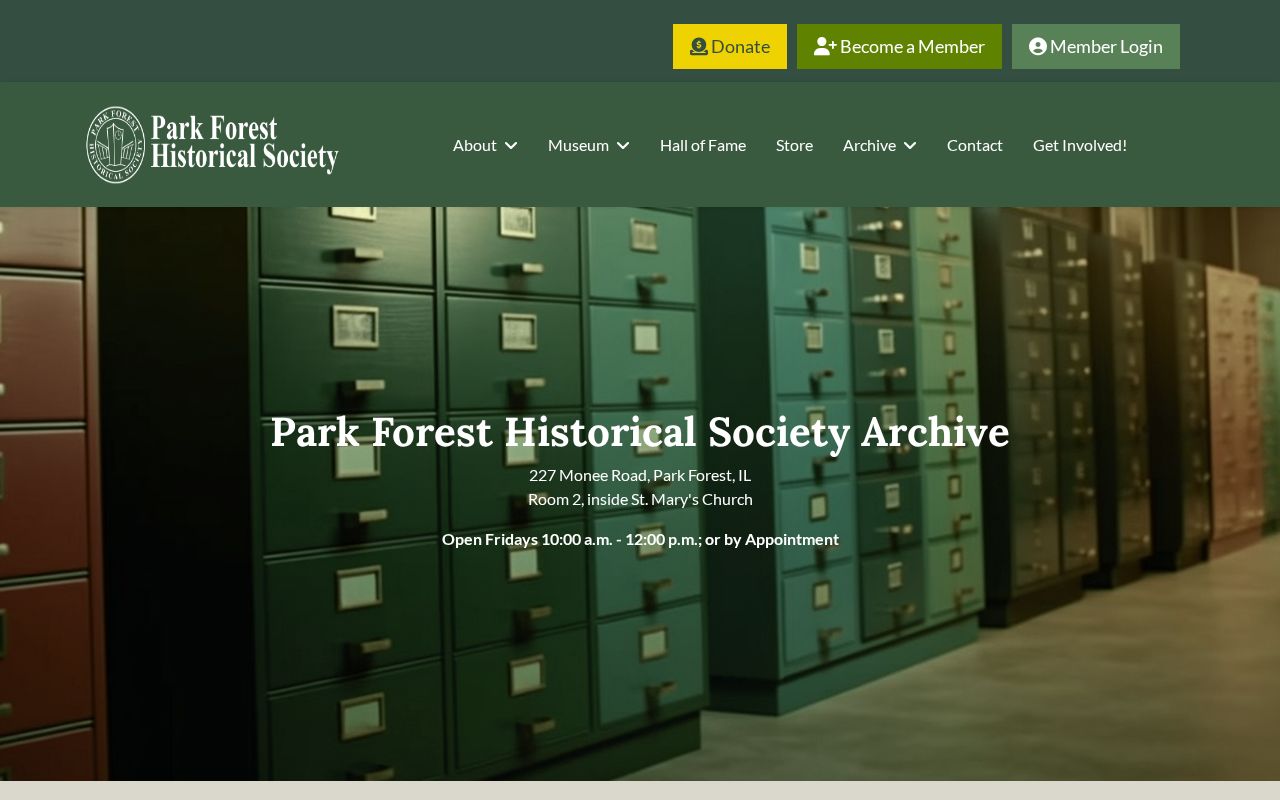
The archive route matters when a printed year or family file is absent from a public catalog.
Ask for a named file series. Useful headings include Directories, Census, Streets, Officials and Employees, Officials and Employees-Directories, Incorporation February 1, 1949, Maps, Home Tour and Remodeling Fair, churches, clubs, and organizations. A focused surname, address, year, and file name gives staff a workable request.
Park Forest Library Database Routes
The Park Forest Public Library databases add sources around the city directory shelf. Ancestry Library Edition is available in the library. HeritageQuest is available to library-card users. Newspaper choices include the Chicago Community Collection, Chicago Daily News, Chicago Sun-Times, Daily Southtown, Chicago Tribune, and Gale news resources. No complete Park Forest obituary index or directory-year run is posted.
The PFPL history page records the library's own development and local role.
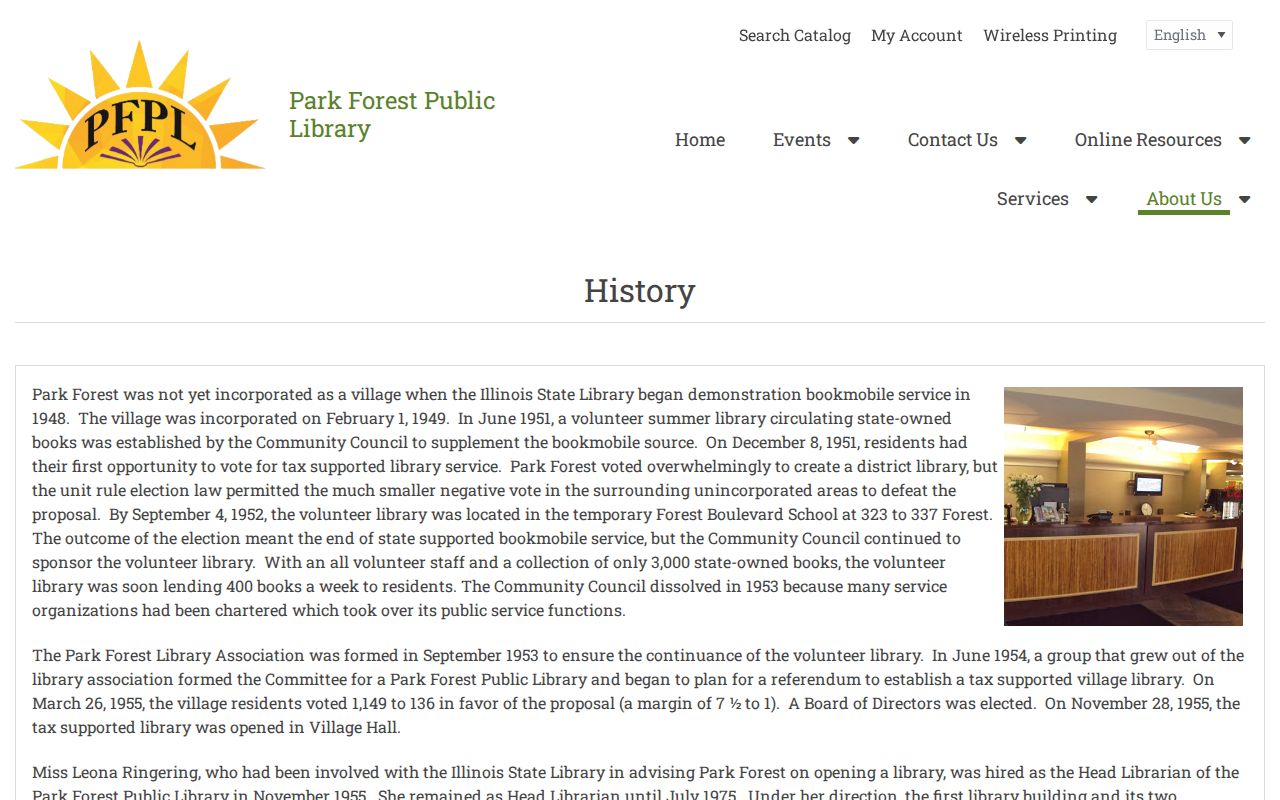
The institutional timeline helps explain why local materials may sit with Adult Services rather than in a single online collection.
The PFHS Park Forest Files are housed in PFPL Adult Services at 400 Lakewood Boulevard. Call 708-748-3731. Some questions require a PFHS researcher, and work beyond 30 minutes may carry a research fee. Archivist Jane Nicoll is listed at 708-481-4252.
Park Forest Images in Illinois Archives
The Illinois Digital Archives Park Forest collection supplies photographs, chronology, planning context, and local documents that can explain names and places around a directory line. It is not a replacement for an annual address book. Use it to identify a school, civic event, plaza, street scene, or organization linked to the person.
Open the Park Forest digital collection.
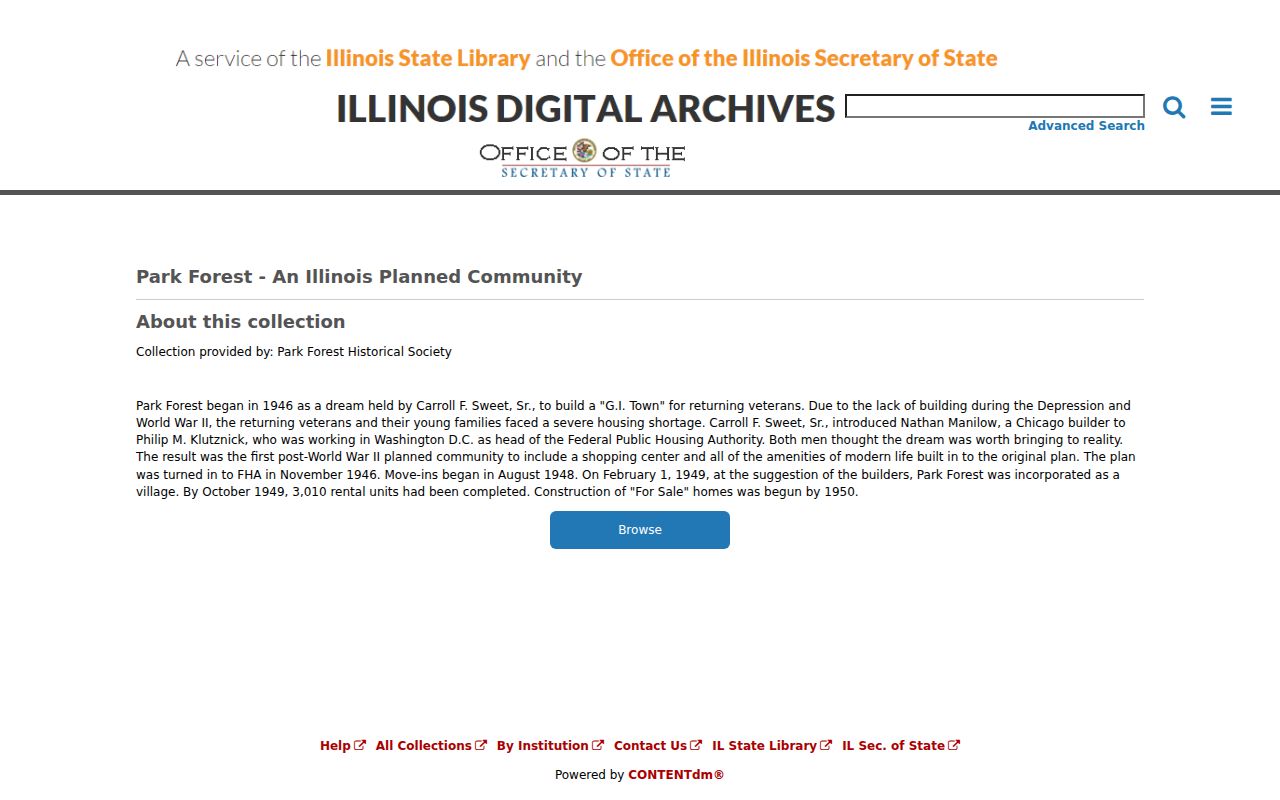
The collection adds visual and civic context to the printed names found in city directories.
Park Forest Plaza opened in 1949, and the 1950s House Museum preserves a 1948 to 1953 townhome setting. Those place anchors can clarify a newspaper or oral-history reference. They should not be used as current occupant sources.
Bridge Park Forest Directory Gaps
PFHS identifies Park Forest Reporter microfilm for 1949 through 1976 and Park Forest Star or Southtown Star material from 1976 forward. News items and obituaries can explain marriage, death, a move, business ownership, school activity, or civic participation when a directory year is missing. Search the surname, address, organization, school, and Park Forest Plaza as separate terms.
PFHS also seeks missing issues, articles, photographs, and early telephone directories. An apparently absent item may be held by a donor rather than indexed online. Yearbook holdings are incomplete, so include both the school and year in a request. Organization files can connect a surname to a club or event, but membership alone does not prove residence.
Trace Families Through Park Forest Directories
A careful city directory trail compares years instead of treating one appearance as the whole story. Pair print evidence with sources that answer different questions.
- Begin with a surname, Park Forest street, and approximate year. Check the LOC PF pages, then ask PFPL and PFHS for the local year closest to it.
- Copy spelling, initials, address, exchange, page, and publication title. Search name variants without changing the original transcription.
- Move to the next available directory year. Note the last year at one address and first year at another.
- Pair directory years with released federal census schedules. The 72-year rule limits access to recent individual schedules, and township geography must match.
- Use Reporter or Star news, obituaries, deeds, and probate records to test the reason for a move or disappearance.
Disappearance from a Park Forest city directory can mean a move, death, changed surname, unlisted phone, publication gap, or missed OCR. It does not by itself show which event occurred. For modern address-keyed parcel work, use the Park Forest street directory rather than extending a historical entry into the present.
If online paths fail, visit PFHS or PFPL, phone the archive contacts, send a mail or email inquiry, use county recorder and clerk archives, or search the Illinois Regional Archives Depository catalogs. Church, cemetery, and funeral-home records may help with a death trail, but no municipal Park Forest interment database was verified.