
Park Forest Resident Lookup Sources
One name can touch several official systems, but each system proves something different. Park Forest residents may appear in Cook County or Will County records, so county comes before certainty. A parcel card may identify an owner or tax-mail recipient. A docket identifies a party in a case. The state voter tool confirms an individual registration after the user supplies identifying facts. Vital records follow strict eligibility rules and are not public address lists.
| Record | What it can confirm | Park Forest route | Access |
|---|---|---|---|
| Property roll | Parcel, situs, owner or mailing fields where shown | Cook Assessor or Will Supervisor of Assessments | Online; assessor and GIS help by phone or counter |
| Voter registration | One person's registration status | Illinois State Board of Elections | Online form; public-file release is restricted |
| Court docket | Party role, case number, filing date, type, status and events | Cook or Will Circuit Clerk | Limited web summary; terminal or copy fallback |
| Vital record | A birth, death, marriage fact or eligible certificate | Cook or Will clerk, or IDPH | ID, relationship and event rules apply |
| Business or license filing | Dated role, entity status or credential | Illinois SOS, IDFPR or Village registration | Online search and certified requests |
Choose the first record by the strongest known fact. An address points to the assessor. A case number points to the clerk. A profession points to IDFPR. A past family event may belong with a county clerk, IDPH, probate file, newspaper, or archive. Record the source date and the person's role before drawing a conclusion.
A Park Forest resident lookup works best when every hit is treated as a lead until its county, role, and date agree.
Route Park Forest Names by County
Park Forest spans Cook and Will counties as well as four townships. A street name or postal label does not settle jurisdiction. Cook-side property searches begin with the Cook County Assessor, while Will-side searches can use the Will County property portal. Will exposes an owner-name mode; Cook's public assessor interface does not.
When the county is unknown, search a complete address, preserve the PIN, and compare municipal and parcel records. PIN means parcel identification number. It gives a more stable bridge than a person's spelling or a tax-mailing address. Cook warns that its property location is not a legal or postal address, and a listed owner may live elsewhere.
Names need the same care. Test a middle initial, suffix, former surname, hyphen, and a business or trust form. Keep separate notes for exact and possible matches. That small step prevents two Park Forest residents with similar names from being merged.
Note: A Park Forest mailing label can lead to the wrong county portal unless the parcel jurisdiction is confirmed first.
Reading Park Forest Court Records
A court index helps when a name needs a dated public event. Cook-side cases use Cook Online Case Information, including matters tied to the Sixth Municipal District at Markham. Will-side cases use the Will Circuit Clerk public search. Both web systems are limited and unofficial. A missing result is not proof that no record exists.
| Cook search control | Input | Best use |
|---|---|---|
| Smart Search | Case number or Last Name, First Name | Direct name or docket search |
| Search type | Party, business, attorney, citation or case | Match the known role |
| Party panel | Name, nickname, birth-date range or identifiers | Narrow same-name results |
| Case panel | Type, status, filing dates, judicial officer | Limit by time and matter |
A Cook result may show case number, party or defendant, filing date, type, status and events. It may lag by days. Will requires an agreement, valid email address and security code before its limited search. Full Will data and images are available at the courthouse terminal, not the public web view.
Confirming a Park Forest Match
Read a result as a dated record, not a full portrait. A docket may list the person's role and events. A parcel card may show tax and building facts. A license record may show a credential class and status. Compare at least two independent details before accepting a resident lookup match.
- Name as indexed, including initials and suffixes
- Record date or effective date
- Party, owner, agent, manager, or licensee role
- Address, county, PIN, file number, or case number where shown
- Status and the custodian's update or disclaimer text
The IDFPR license lookup can separate people by license class and number. Its search screen shows the state professional and real-estate lookup route.
Open the official IDFPR search represented below before using a credential as corroboration.
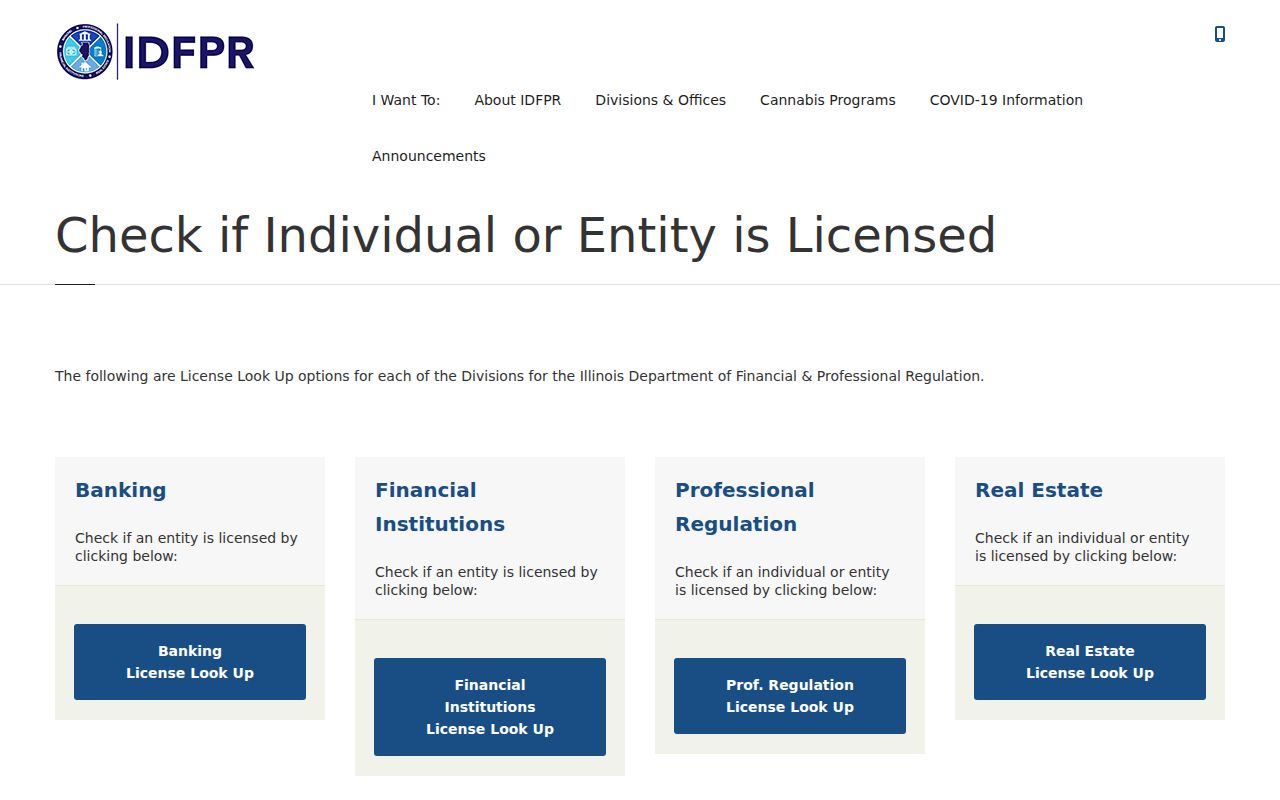
The screen is a starting point. A separate discipline or certified-verification request may be needed for a formal record.
The Illinois I-Cash search pictured here accepts an owner or business name with city, ZIP, or property ID as added filters.
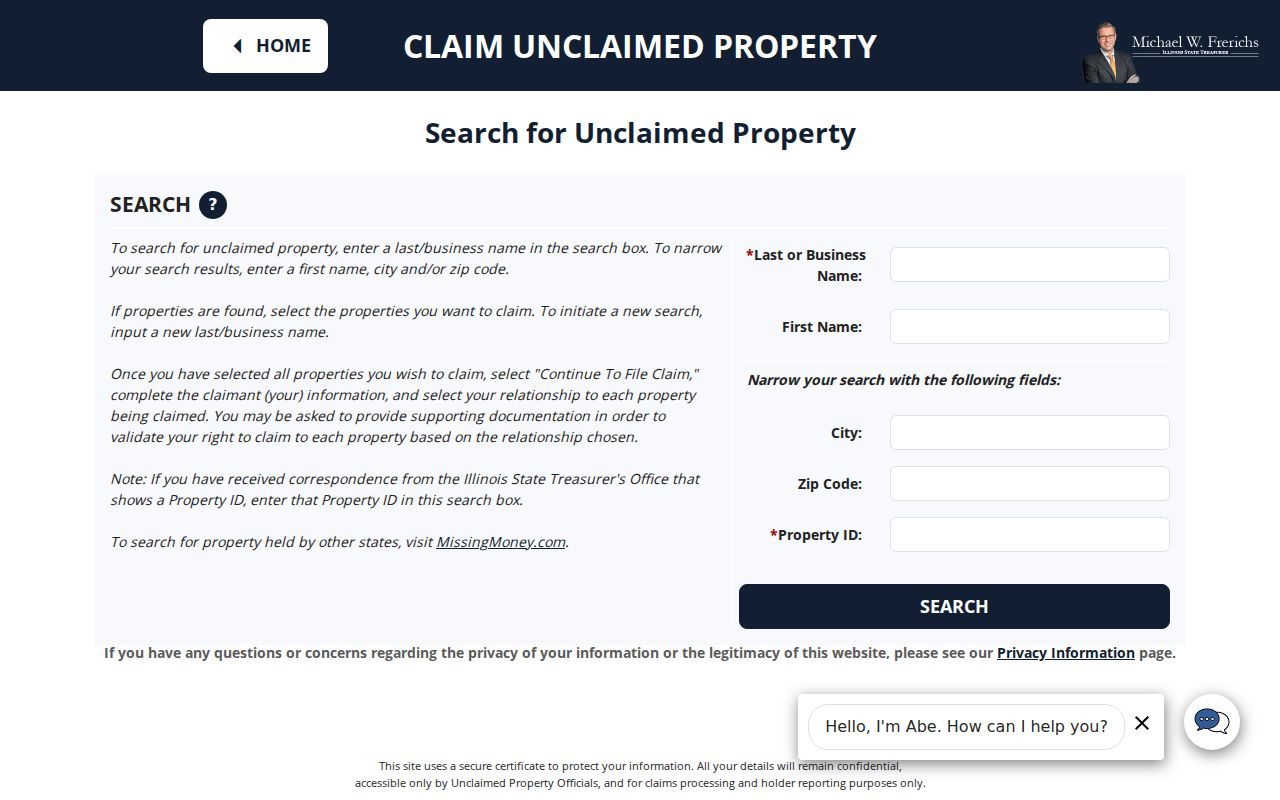
An I-Cash match shows a possible unclaimed-property interest, not current residence. Confirm the owner details through the Treasurer's claim process.
Park Forest's business directory screen can add a dated local business or address clue.
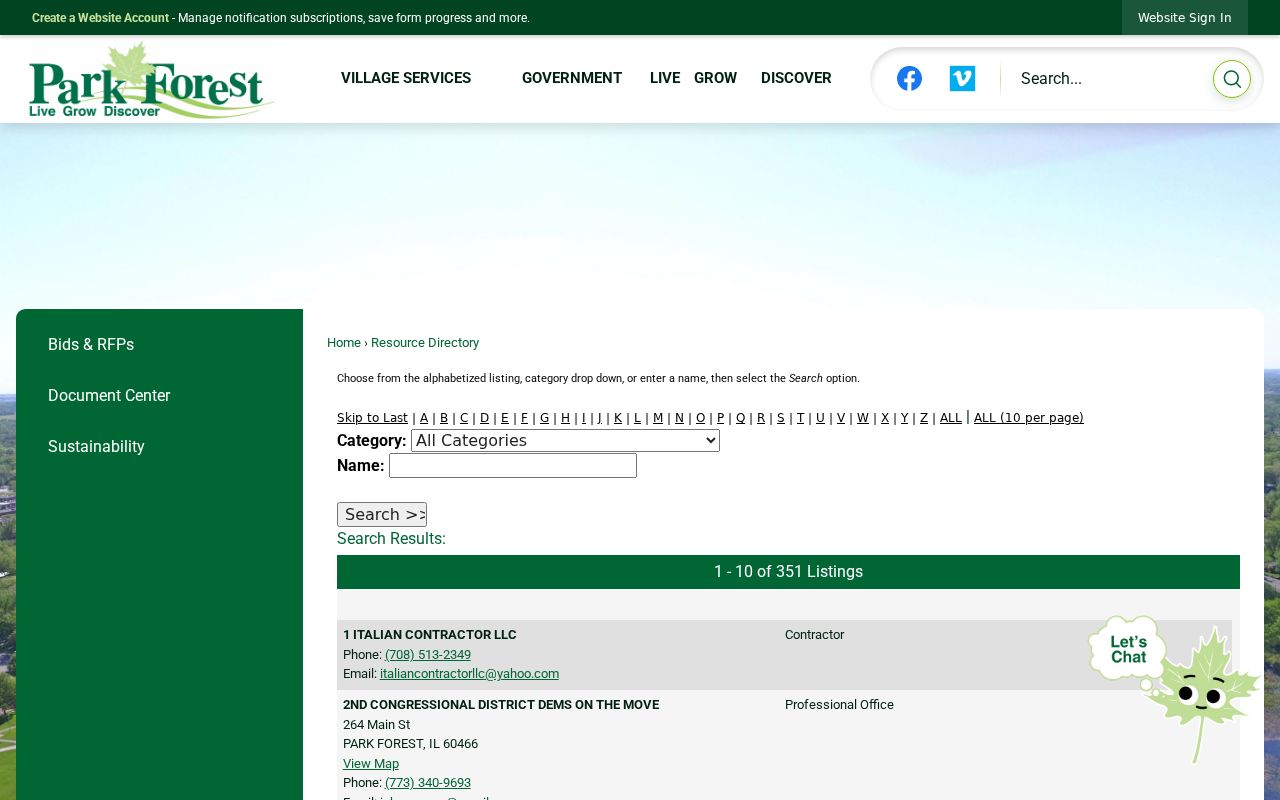
The public directory searches by business name or category. It does not provide an owner-name search or prove where a business contact lives.
Verify Park Forest Resident Records
Build the check in a fixed order. Start with spelling and county, then use the narrowest official index. Preserve identifiers and dates. The goal is agreement between records created independently.
- Write the full name and test initials, suffixes, former surnames, and likely spelling variants.
- Confirm Cook or Will County through an address, parcel map, PIN, or event location.
- Match the name in a second source, such as a court record, voter response, license, or filing.
- Compare roles, dates and jurisdiction. Set aside stale, incomplete, or conflicting hits.
- Ask the custodian for a paper file or certified copy when the official document matters.
Two-source confirmation matters greatly in Park Forest. The postal city can sit beside a county line, while a parcel's owner and occupant may differ. Court summaries may be delayed, voter access is narrow, and old directory entries belong only to their printed year.
- Docket
- A court's dated list of filings, hearings and events in a case.
- Index vs image
- An index points to a record; an image shows the filed page itself.
- Certified copy
- A copy authenticated by the custodian for an official purpose.
Park Forest Voter and Vital Checks
The Illinois voter lookup is a one-person confirmation form. It asks for first name, last name, birth date, and a five-digit ZIP. A later step may ask for street number and street name. It does not provide a ZIP-wide or street-wide roster, and Illinois law restricts broader voter-file use and release.
Vital records require a different question: where did the event occur? A current Park Forest address is not enough. Cook and Will clerks issue county certificates. The Illinois Department of Public Health holds state birth and death routes and verifies marriage facts, while county clerks issue marriage certificates. Divorce files belong with the circuit clerk.
Birth records are restricted. Genealogy birth copies open after 75 years under IDPH guidance. Death genealogy copies open after 20 years, but IDPH sends pre-1916 searches to county or archival routes. Mail, fax, phone, county counter and the Springfield office remain useful when a web page supplies only a form.
Note: FOIA does not override certificate eligibility, a sealed court file, or another confidentiality rule.
Park Forest Family Connections
Probate can help locate an heir when the case is public. Search the correct circuit clerk by the decedent's county and compare party roles, dates, addresses, and estate documents at the clerk terminal. An obituary may name relatives, but relationships still need confirmation against the file or a vital record.
Illinois provides consent-based routes for adoption questions. The Illinois Adoption Registry and Medical Information Exchange serves eligible adopted or surrendered persons, birth parents, and relatives under its rules. The DCFS adoption-records page explains the Confidential Intermediary process and court-ordered search route.
Review the official registry information shown here before choosing an adoption-search route.
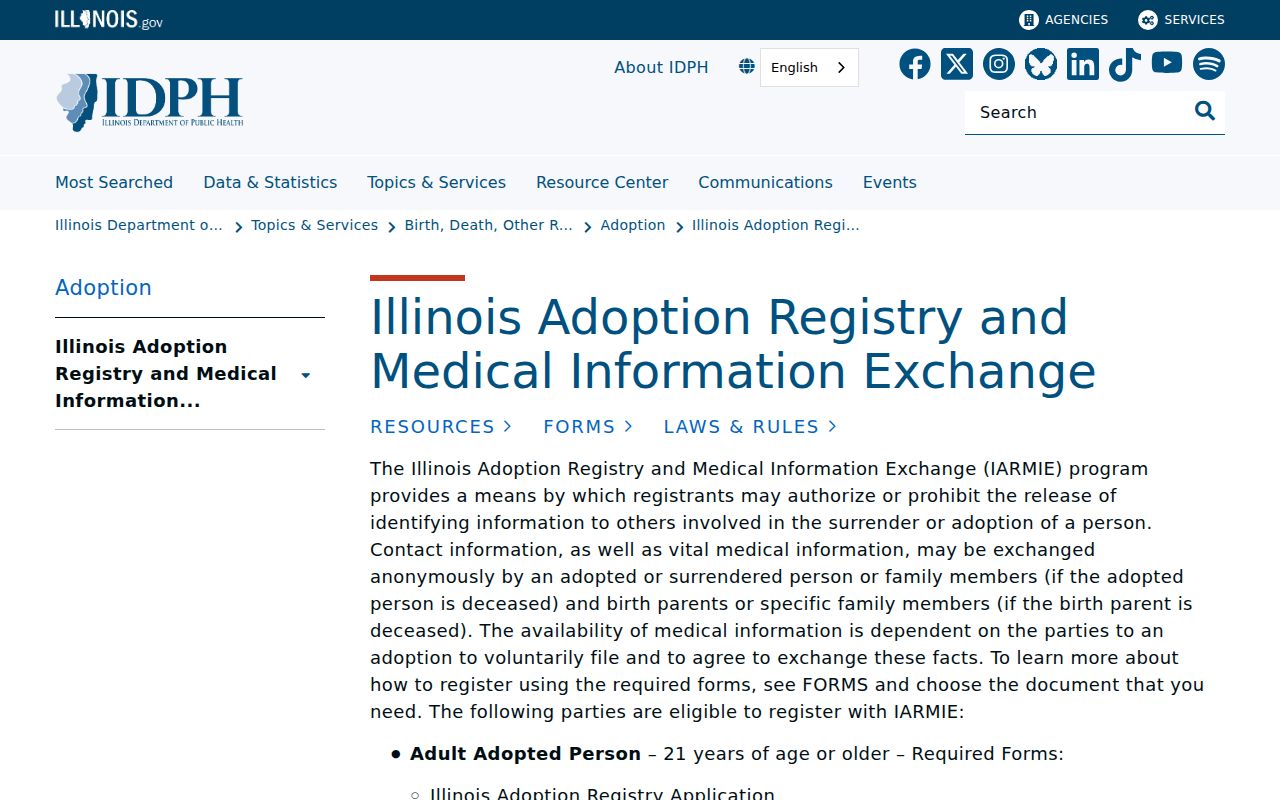
The registry protects consent and sealed information; it is not a public resident list.
Compare the DCFS adoption-records route shown below when registry consent alone does not answer the family question.
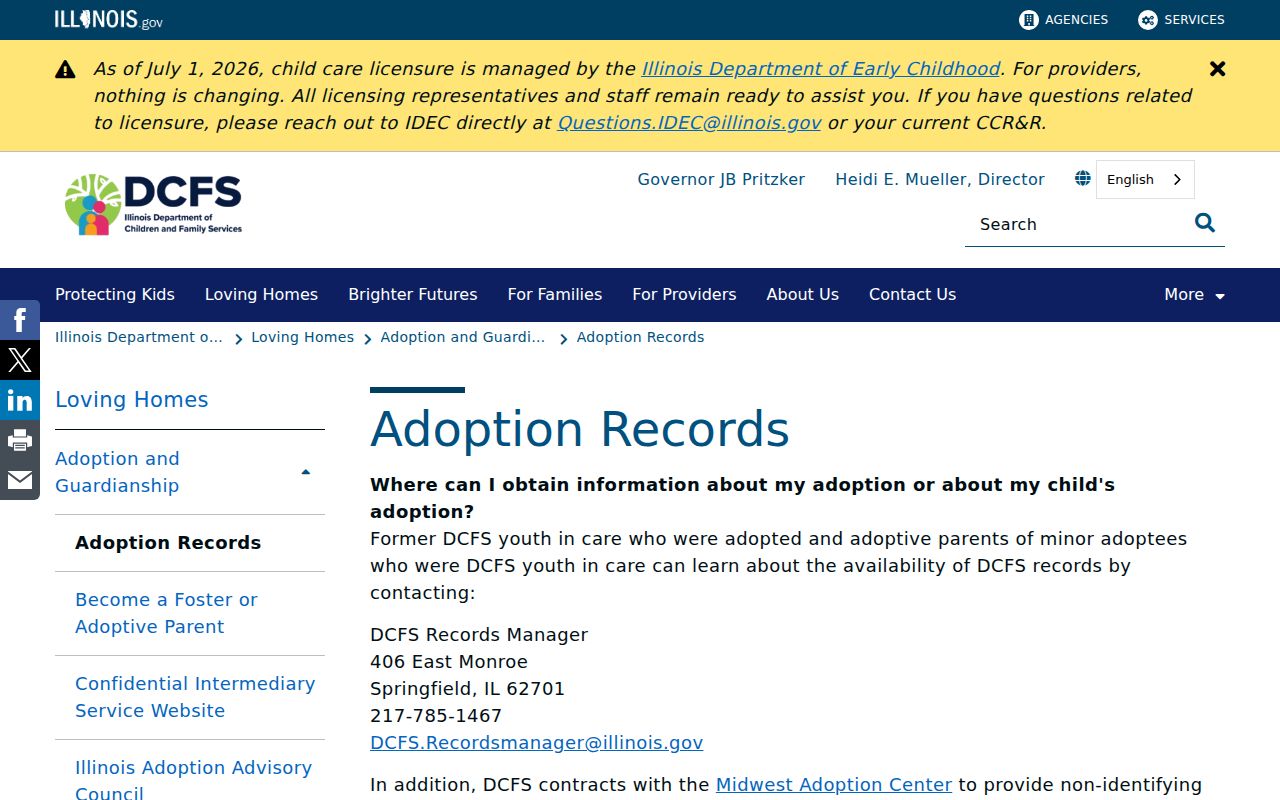
DCFS directs eligible users to the court-controlled Confidential Intermediary process rather than exposing a public name list.
For a former classmate, Park Forest Public Library newspapers, yearbooks, and local databases can add a dated clue. Historical Society files may place a surname in an event. Staff may need a school, year, street, or organization before searching.
When Park Forest Portals Stop
Online access is only one channel. Cook court files may require a clerk counter or certified-copy request. Will provides fuller case data and images at an onsite terminal. Older deeds may be in books, microfilm, archives, or IRAD. A narrow request works best with a name, date range, address, case number, PIN, or document number.
The Village FOIA route accepts electronic, email, fax, mail, and paper requests for releasable municipal records. Illinois FOIA generally gives public bodies five business days for an ordinary noncommercial response, subject to extensions. Park Forest lists the first 50 black-and-white pages as free and later pages at 15 cents each.
FOIA can reach releasable permit, ticket, or registration material. It cannot unlock protected vital certificates or sealed court files. A phone call before sending the request can identify the right custodian and avoid a search in the wrong county.
The Cook County custody locator shown here is a separate official name search with an optional booking ID and CAPTCHA.
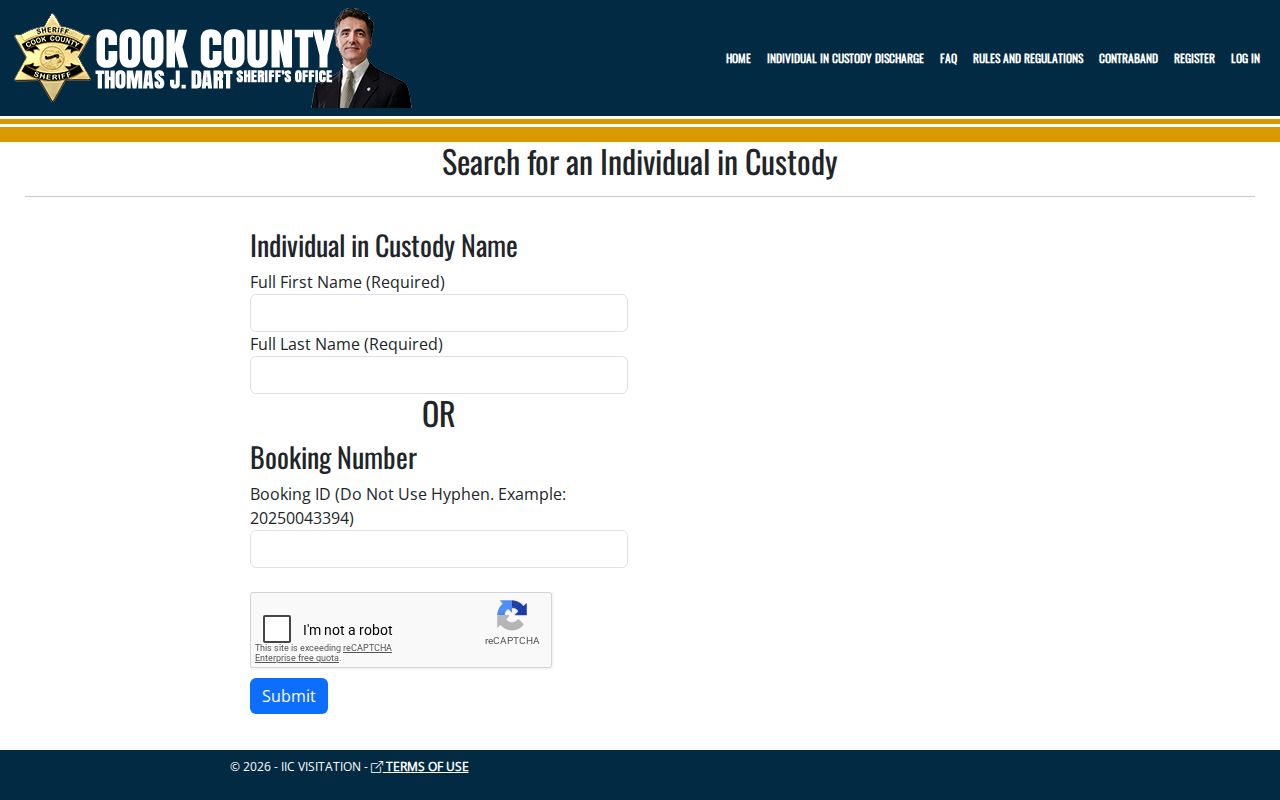
A custody result is time-sensitive and limited to that system. It is not a complete court history and must not be treated as one.
Park Forest Resident Lookup Limits
Public access has firm boundaries. Sealed and expunged cases, protected victim details, restricted voter data, and vital certificates do not become public because a searcher knows a name. Use records only for a lawful personal purpose, such as family history, an estate matter, reconnecting with consent, or checking a filing tied to one's own property.
Lawful use. Park Forest records may not be used to stalk, harass, threaten, impersonate, or harm a person. Respect sealed records and confidentiality programs.
The Illinois Address Confidentiality Program gives qualifying victims a substitute address and mail forwarding. It cannot erase records that already exist or guarantee property-record secrecy. Never use a parcel trail to defeat a protected address.
For an error, contact the office that created the record. Commercial profile removal does not correct a deed, docket, voter entry, or newspaper. Will Recorder has a defined redaction request for sensitive identifiers, while court orders and statutes control other removals.